Opinions & Editorials · Issue III
Pope Leo XIV Sets the Example for Returning Relics
Have you ever been to a museum and wondered where all the artifacts were acquired from? It is estimated that up to 85% of the objects displayed and kept in museums worldwide lack a complete paper trail of ownership; however, some are trying to fix this problem, including our Holy Father, Pope Leo XIV.
The British Museum in London houses eight million artifacts, the largest collection in the world. Due to Englandʼs storied history, the museum acquired numerous objects during wars and Englandʼs imperial period. In addition, many of these pieces are not even up for viewing, as the gallery has at most 80,000 of the 8 million artifacts on display at any given time, which is less than 1% of the total supply available.
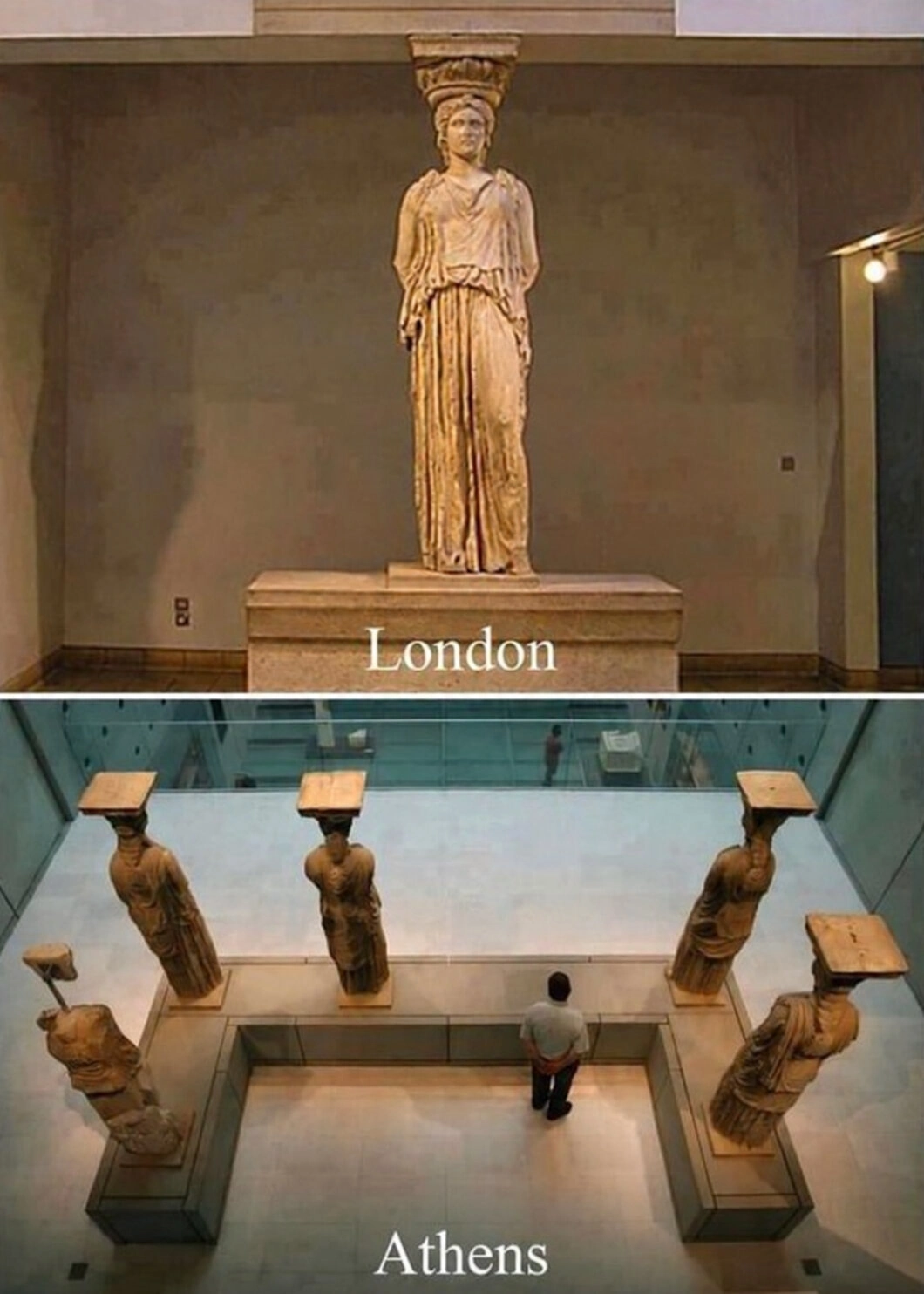
Within this 1%, it can be difficult to fathom the number of artifacts that have been acquired through seemingly ambiguous practices. Many of these relics are placed under the label of “contested objects.” This means that the artifact shown was challenged by its country of origin and has become a subject of dispute. More specifically, this label is placed when a country has formally requested an object in a museum to be returned; reasons for return generally center on how the museum acquired the artifact: war spoils, colonial pressure, or other deemed unethical avenues.
However, returning these artifacts is not as simple as fulfilling the request, particularly with the British Museum. There is a bulwark of laws that forbid the institution from returning the artifacts to their country of origin. The most prominent of these laws is the 1963 British Museum Act, which prohibits the museum from removing any items from within its collections, “regardless of the circumstances of its acquisition.” Given this and similar laws, it becomes apparent why these museums are unable to return objects which other countries claim are stolen.
Recently, Pope Leo XIV has helped to mend this situation. On November 15th, 2025, the Pope returned sixty-two artifacts back to the Indigenous peoples of Canada. The items returned (including an Inuit kayak) came from the Vatican Museumsʼ ethnographic collection, known as the Anima Mundi Museum. While the acquisition of numerous artifacts at world-renowned museums is contested, Pope Leo XIV and the Catholic Church have helped to set an example for the process of returning artifacts to their country or people of origin.