Opinions & Editorials · Issue I
Heating Our Lives and Their Oceans
The Earthʼs oceans are warming by means of two factors, both of which we can change. The first is global warming, which has affected our planet for many years, while the second problem has only been around since 2023 and continues through the present: A.I. underwater data centers (or UDCʼs), off the coasts of several countries.
A great amount of energy is required for these UDCʼs to function; Cornell researchers have learned that the current rate of A.I. growth could annually put twenty-four to forty-four million metric tons of carbon dioxide into the atmosphere by 2030. This amount is equivalent to the annual carbon footprint of three to six million American households. As said in a recent article by Oceana, “AI data centers feed the climate change that is warming & acidifying the oceans.” To run such centers on land is already damaging enough to the environment, but to place them into the water is even more damaging in the long run.
In the information gathered by a January article in Discover Magazine, it is estimated that AI data centers will surpass 20% of global energy demand within the next four years. This means that by 2030, these data centers will increase the amount of energy that the world needs by 20%. This growth will contribute to global warming and heatwaves that have already begun to occur. With these current factors, the oceanʼs temperatures are on the rise.
All the more, when you consider the construction of the UDCʼs, our global temperature will spike to even higher degrees. A 2022 study in Scientific Reports found that when A.I. data centers intake warm water, they eventually release it back at an even higher temperature. As a result, the water required to cool UDCʼs contributes to a globe that is continually heating up.
Furthermore, an additional effect of putting the AI data centers underwater is sea levels rising. This is especially frightening because as glaciers are melting, sea levels could rise by an alarming 195 feet; these increased sea levels trigger flooding, coastal erosion, and land loss. New York, Boston, and our very own Los Angeles are all cities projected to be affected by land loss due to rising sea levels in the coming decades. Essentially, any city that is located near or along the coast can and likely will be affected by the rising sea level caused by climate change and spurred along by the construction of UDCʼs.
China and Scotland are two prominent countries that have placed many of these hot, energy-hungry UDCʼs underwater, affecting the adjacent ocean ecosystems as well. Dr. Kathryn Matthews, Oceana's chief scientist and senior vice president, said, “Right now, so much AI is unnecessary or even damaging... Ultimately, we must stay focused on directing these technologies in ways that genuinely help out communities and ecosystems.”
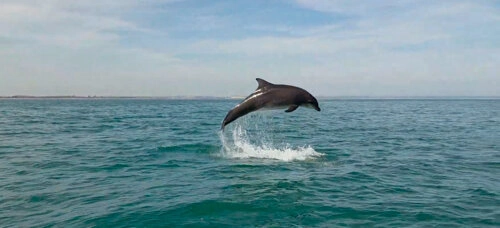
Animals throughout the world are in danger of losing their homes due to warming oceans. Scotland, a global hub for UDCs, harbors bottlenose dolphins, gray seals, Eurasian otters, and orcas which have become imperiled. In China, native species such as the vulnerable Chinese white dolphin are in even more danger. When countries like these place data centers along the ocean, they are indirectly harming the wildlife that lives and thrives in those spaces, ultimately destroying their habitats and populations.
Overall, A.I. data centers are being built and placed inside our oceans, causing further damage that not only affects our lives, but the lives of aquatic animals as well. The warming of our oceans is becoming increasingly evident, and we can make a change, even if it is small. The simplest (yet also significant) of these changes is to stop the utilization of A.I. for generating images, videos, and doing your assignments. The continued use of A.I. for such trivial matters will not only help with slowing the rising temperatures but also enhance your educational capabilities for the greater good.
Citations:
Cottier, Cody. “AI Data Centers Come with a Hidden Environmental Cost — Is Sustainability Possible? | Discover Magazine.” Discover Magazine, 27 Jan. 2026, www.discovermagazine.com/ai-data-centers-come-with-a-hidden-environmental-cost-is-sustainability-possible-48590. Accessed 21 Sept. 2026.
Holcomb, Sarah. “The Rising Tide of Ai.” Oceana: Protecting the Worldʼs Oceans, 1 June 2026, oceana.org/blog/the-rising-tide-of-ai/. Accessed 21 Sept. 2026.
“International Fund for Animal Welfare.” IFAW, www.ifaw.org/. Accessed 21 Sept. 2026.
Nature News, Nature Publishing Group, www.nature.com/srep/. Accessed 21 Sept. 2026.