Opinions & Editorials · Issue IV
Don't Let Your Literacy Falter
When you were a kid, you might have had an academic task focused on building literacy, like participating in a Read-A-Thon, writing a book report, or even playing ABC Mouse. For some, it might have been your favorite excuse to read, or perhaps you dreaded it and dreaded any time you had to read a book for school. However, sometimes I think we forget how important those moments of literacy-building back in second grade really were.
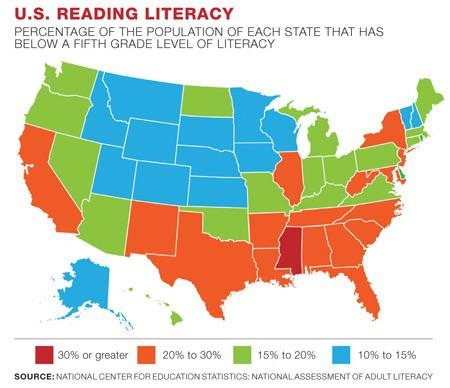
As of this year, 54% of adults in the U.S. read at or below a sixth-graderʼs reading level. If an adult lacks basic reading and writing skills, it can be difficult for them to even get a good job; they are faced with limited options and could be overlooked for promotions. Imagine half of the people you know, stuck at an entry level job since their reading level is below a sixth grade. While some tasks such as writing emails or completing forms can be aided by the use of A.I., it does not help you in the long run. Having artificial intelligence cannot replace your own intelligence. Numerous jobs (administrative assistant, paralegal, office technician) require a typing test to see how quickly and accurately you can type. If you canʼt provide effective, person-based communication both physically and over an email, it can be extraordinarily difficult to help someone. Literacy helps to build these necessary human-centric skills and communication competencies that A.I. cannot replicate.
While it is imperative that a great concentration for building literacy exists, the individual is not always at fault for lack of education. It is common for underfunded schools to fall behind in many departments, or even to retain teachers as many educators burn out and end up leaving. When schools donʼt have funding for supplies, teacher aids, academic programs, or sometimes even just teachers, it creates a domino effect of learning that negatively impacts student outcomes. It can be reasonable to see why so many adults and kids lack age-appropriate proficiency in the English language.
The next time you find yourself dreading to read a book for English class, try to reframe it as a privilege. It can be hard to remember how much effort our elementary teachers put into us to create a good foundation and possibly a love for reading. Not everyone needs to love reading or English class, but it is apparent how important it is to build oneʼs literacy in both the short and long-term. So shout out to all the teachers out there who come and try their best every day for us!